
How I Build Travel Itineraries That Don’t Feel Rushed
When it comes to planning trips, I’ll be the first to admit something:
I’m a little Type-A.
But only when it comes to things I care about.
Ask me to research something scientific or complicated and there’s a good chance I’ll lose interest halfway through. But when it comes to travel? I can happily spend hours going down the rabbit hole.
I love researching destinations — watching TikToks, reading blogs, checking Yelp reviews, scrolling through Google reviews, and looking at way too many photos of places before we even arrive.
Some people think that level of planning makes a trip feel over-scheduled.
For me, it actually does the opposite.
Planning ahead is what allows our trips to feel relaxed instead of rushed.
Over the years, I’ve developed a simple way to build travel itineraries that gives us structure without making the trip feel like a checklist.
Here’s how I do it.
Step 1: Go Down the Research Rabbit Hole
The first thing I do when planning a trip is research everything.
And I mean everything.
I usually start by:
- Watching TikToks or Reels about the destination
- Reading travel blogs
- Looking through Yelp and Google reviews for restaurants
- Searching Pinterest for travel guides
- Saving places on Google Maps
This is usually when I start building a running list of things that look interesting.
At this stage I’m not worrying about the schedule yet — I’m just collecting ideas.
Step 2: Map Everything Out
Once I have a list of things we might want to do, I start looking at where everything actually is.
This step is really important because distances can be deceiving when you’re looking at travel guides.
Two places might both be in the same city, but still be 30–45 minutes apart depending on traffic, mountains, or park logistics.
I’ll usually drop everything into Google Maps so I can visually see what areas make sense to group together.
This helps prevent the classic travel mistake of zig-zagging across a destination all day.
Step 3: Plan One “Main Thing” Per Day
This is probably the biggest reason our trips don’t feel rushed.
Instead of trying to pack three or four major activities into one day, I usually plan one main highlight each day.
For example:
- a big hike
- a national park visit
- a scenic drive
- a major attraction
Once that main activity is set, everything else becomes optional.
If we do more, great.
If we don’t, the day still feels like a success.
Step 4: Add a Few “Optional” Activities
This is one of my favorite planning tricks.
For each day, I’ll usually add one or two optional activities nearby.
These might be things like:
- a short hike
- a scenic viewpoint
- a playground for the kids
- a café or bakery
- a quick photo stop
This helps avoid that weird travel moment where you finish your main activity and suddenly think:
“Okay… now what?”
But because these activities are optional, there’s no pressure to do them if we’re tired or just want to relax.
Step 5: Leave Room for the Unexpected
Some of our favorite travel moments weren’t planned at all.
In fact, one of them happened because I completely messed up a reservation.
We had planned a trip to the Grand Canyon and I somehow managed to book our hotel three months in the future. I still have no idea how I did that.
By the time we realized the mistake, everything near the park was completely booked.
Naturally, I started to panic a little… but my husband handled it much more calmly than I did.
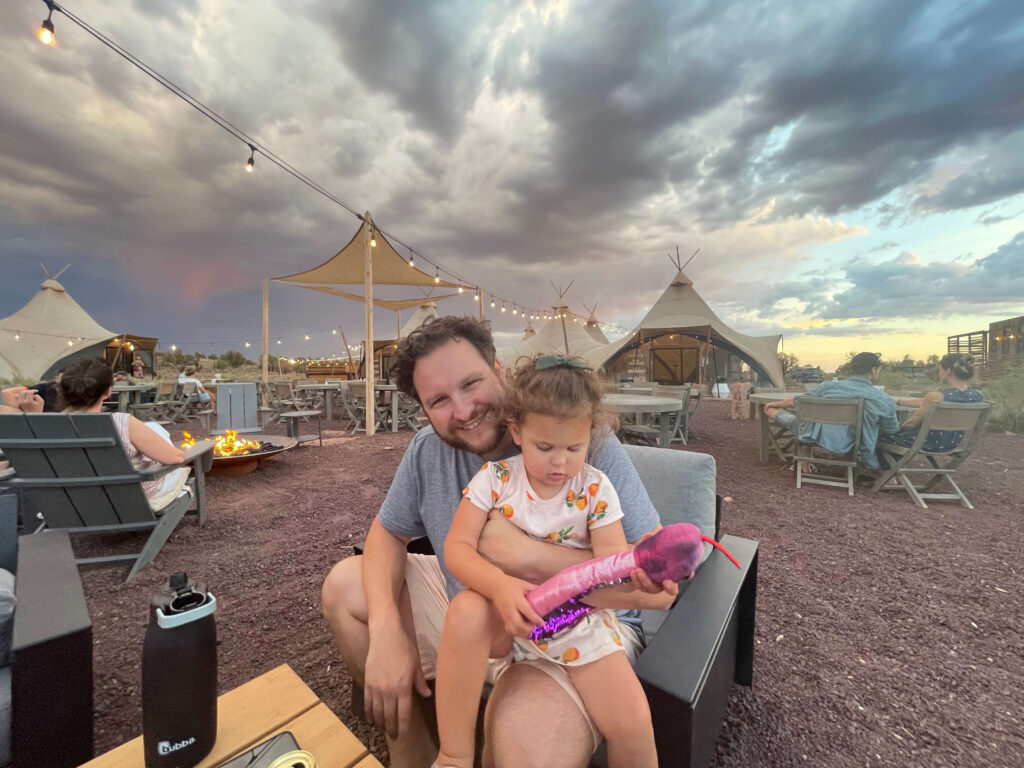
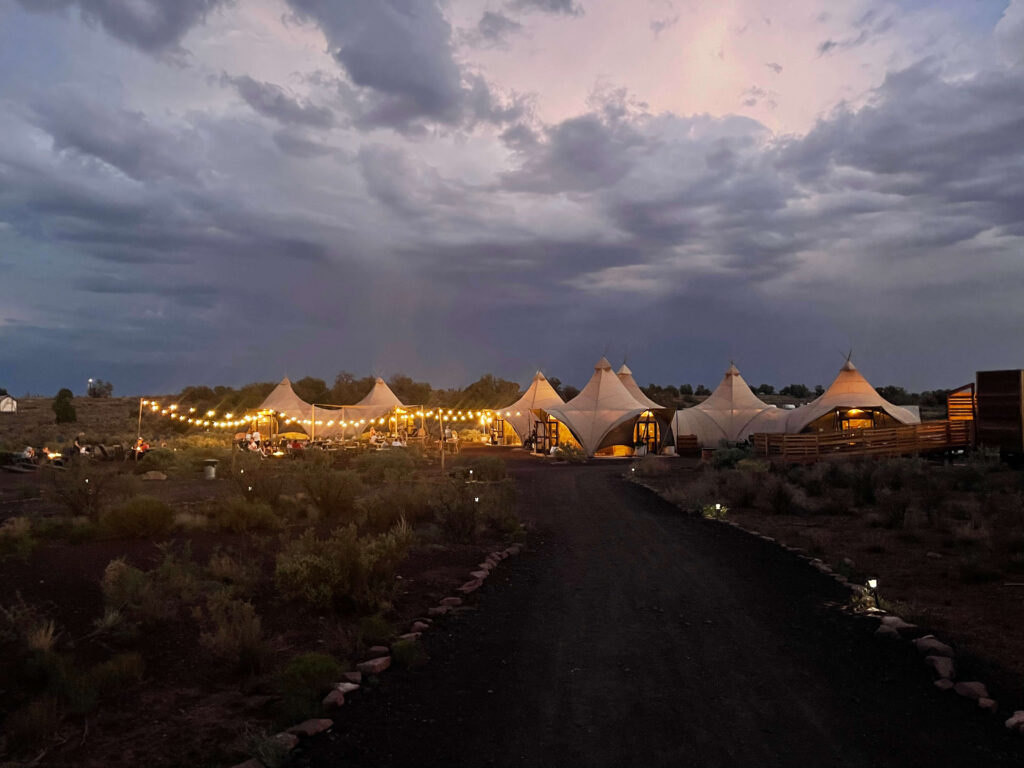
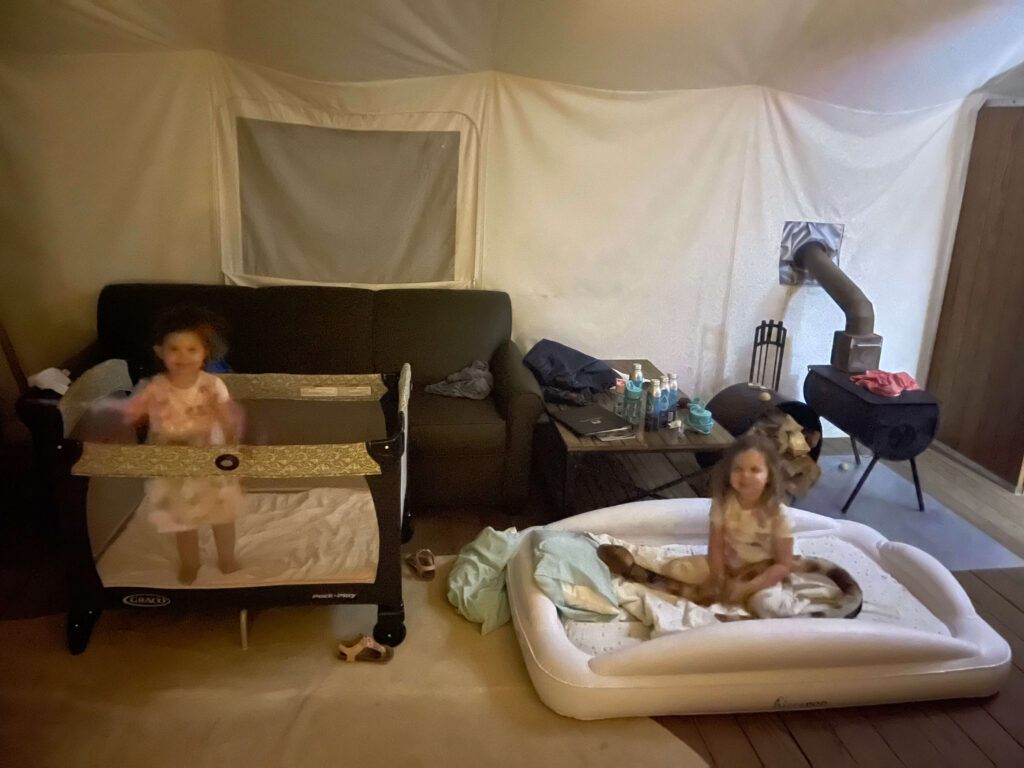
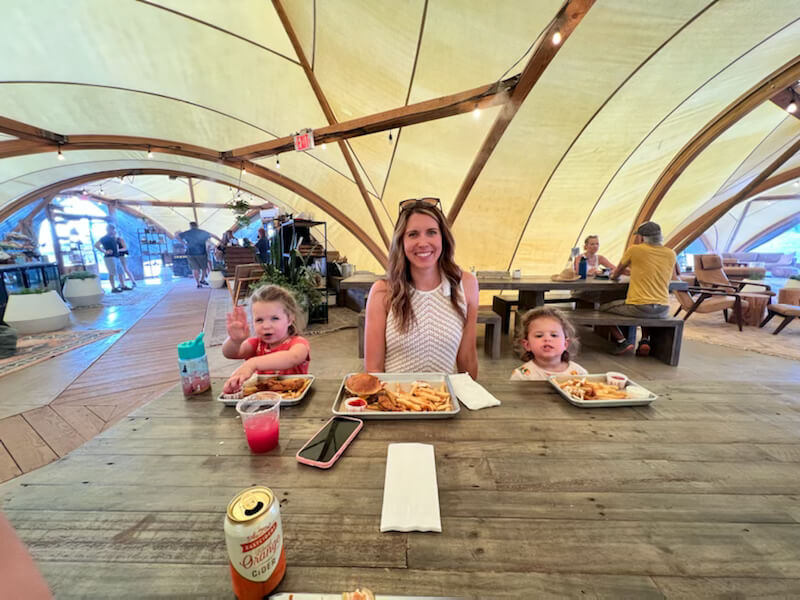
After a little searching, we ended up booking a glamping stay at Under Canvas instead.
And honestly? It ended up being one of the highlights of the trip.
They had live music that evening, we roasted s’mores with the kids, and a huge monsoon storm rolled through while we were in the tent. We all sat there laughing and listening to the rain.
It’s still one of those travel memories we talk about years later.
That experience reminded me that even with the best planning, sometimes the unexpected moments turn out to be the best ones.
Why I Love Planning This Way
At the end of the day, travel planning should make the trip more enjoyable, not more stressful.
For me, doing a little extra research ahead of time means that when we arrive, we’re not spending hours trying to figure out what to do next.
We can just enjoy the place we came to see.
And the best part?
Even with all that planning, some of the best moments on our trips still end up being the ones we never expected.
Quick Tip
If you’re curious how this approach looks in real life, you can see examples in some of my travel guides like:
- Kanab, Utah (our favorite basecamp for Zion and Bryce)
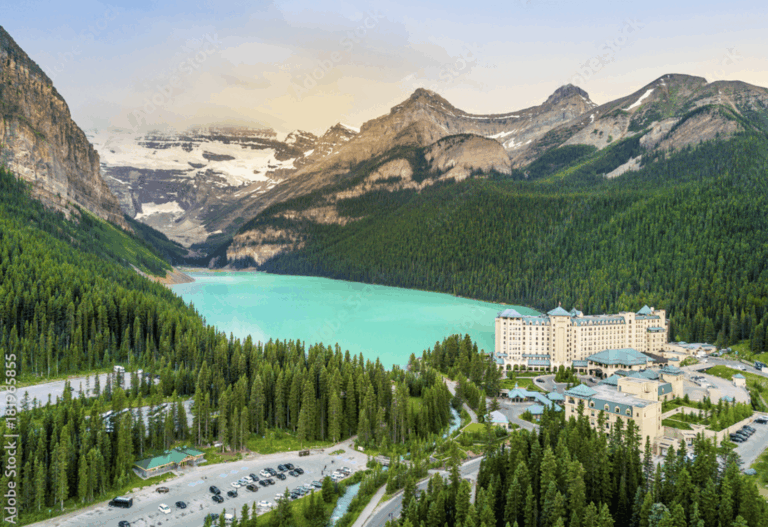
- Banff & Lake Louise in the Canadian Rockies
These itineraries follow the same structure: one main activity per day with flexible options built in.